Local Conditions — 02
The Marine Layer & June Gloom on San Clemente Windows
Six weeks of nightly fog that undoes a clean before you even notice it.
What the Marine Layer Actually Does to Glass
From roughly late May through early July, a thick marine fog rolls into San Clemente overnight and burns off by early afternoon — a pattern locals call “June Gloom.” It looks harmless, but that nightly moisture deposits a fine salt film on every exterior surface in the city, glass included.
Because it happens every night for weeks at a stretch, the marine layer is one of the main reasons a clean that would hold up fine in October looks hazy again by mid-June — even on homes that aren’t directly ocean-facing.
Why Timing Matters More During This Stretch
A standard cleaning interval that works the rest of the year often needs to tighten up during marine-layer season, particularly for bluff-top and direct ocean-facing properties already dealing with salt air on top of the nightly moisture.
How We Handle It
- Deionized water exterior clean so the marine layer’s moisture has nothing mineral-rich left behind to bond with
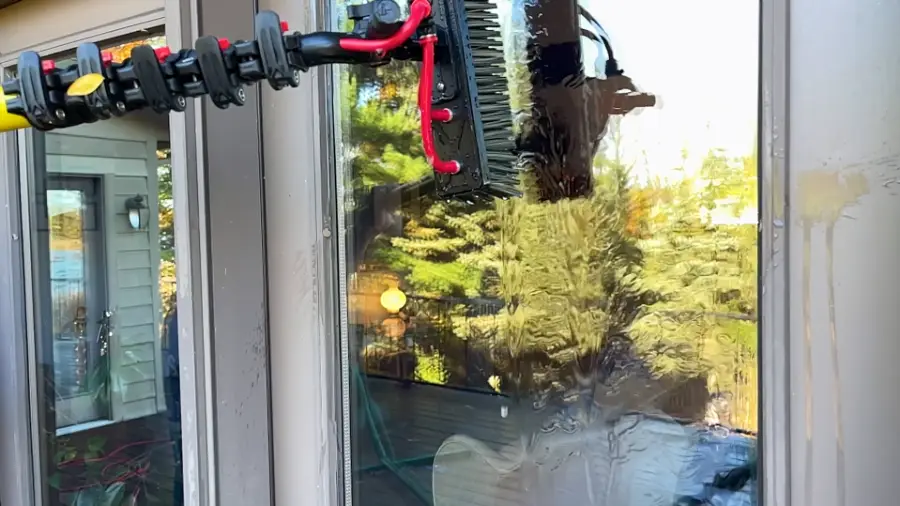
- Water-fed pole for upper-story glass, since second-story windows catch the fog just as much as ground floor
- A schedule that accounts for the season rather than a flat interval year-round
Marine layer exposure compounds with salt air and hard water — most San Clemente homes are dealing with more than one of these at once.
Marine Layer Film vs. Everyday Dirt
The marine layer leaves a different kind of mess than normal dust. Because it arrives as moisture, it tends to dry in faint water marks and a thin, uniform film instead of visible dirt. You will often notice it first on windows that catch morning light, when the glass looks fogged even after the actual fog has burned off.
- Faint drip lines or tiny dried droplets across the pane
- A uniform dullness that appears in early summer and not in fall
- Second-story glass looking just as hazy as ground-floor windows
- Screens holding a damp, dusty layer that transfers to the glass
Planning Around June Gloom
If you like your windows at their best for summer, the timing of your clean matters as much as the frequency. A clean scheduled right as the marine layer season winds down in early July holds up far better than one done in late May, which spends six weeks collecting nightly moisture. For homes that want clear glass all season, a slightly tighter interval from late May through July keeps the film from building up between visits.
Marine Layer Questions
Common questions about how the seasonal fog affects San Clemente windows.
Is June Gloom the same as the marine layer?
Yes. June Gloom is the local name for the marine layer pattern that is strongest from roughly late May through early July, when fog rolls in overnight and burns off by early afternoon.
Does the marine layer affect homes away from the beach?
It does. The fog reaches well inland across San Clemente, so homes that are not directly ocean-facing still collect film during the season, just more slowly than bluff-top properties.
Should I clean my windows before or after marine layer season?
For the longest-lasting result, schedule a clean toward the end of the season. If you want clear glass all summer, a tighter interval during the season works better than one deep clean in spring.
Windows Hazy Again After a Foggy Week?
Call (949) 883-2299 and we’ll build a schedule around your actual exposure, not a generic interval.